
The Food Pyramid Is Flipped!
You have likely heard that new U.S. food guidelines were released on January 7th, and wow what an improvement! While the old dietary guidelines relied heavily on processed carbohydrates with high glycemic ratings, the new food pyramid emphasizes REAL FOOD! Imagine that! This is traditionally the way people have eaten for centuries before processed food was manufactured to make cooking cheaper and more convenient. It is the way our bodies were designed to be fueled!
The new pyramid completely flips the recommendations, which is a welcomed change, in my opinion. It not only discourages highly-processed foods, it maintains that eating real, whole foods is key. It is pretty much exactly the way my family has been eating for years using the 80/20 rule (80% nutrient-dense whole foods, 20% not-so-great indulgent foods). The heart of the new guidelines emphasizes a high priority on nutrient-dense proteins, fats, and minimally processed fruits & veggies, with an encouragement to eat whole grains while avoiding processed/refined carbohydrates & sugars.
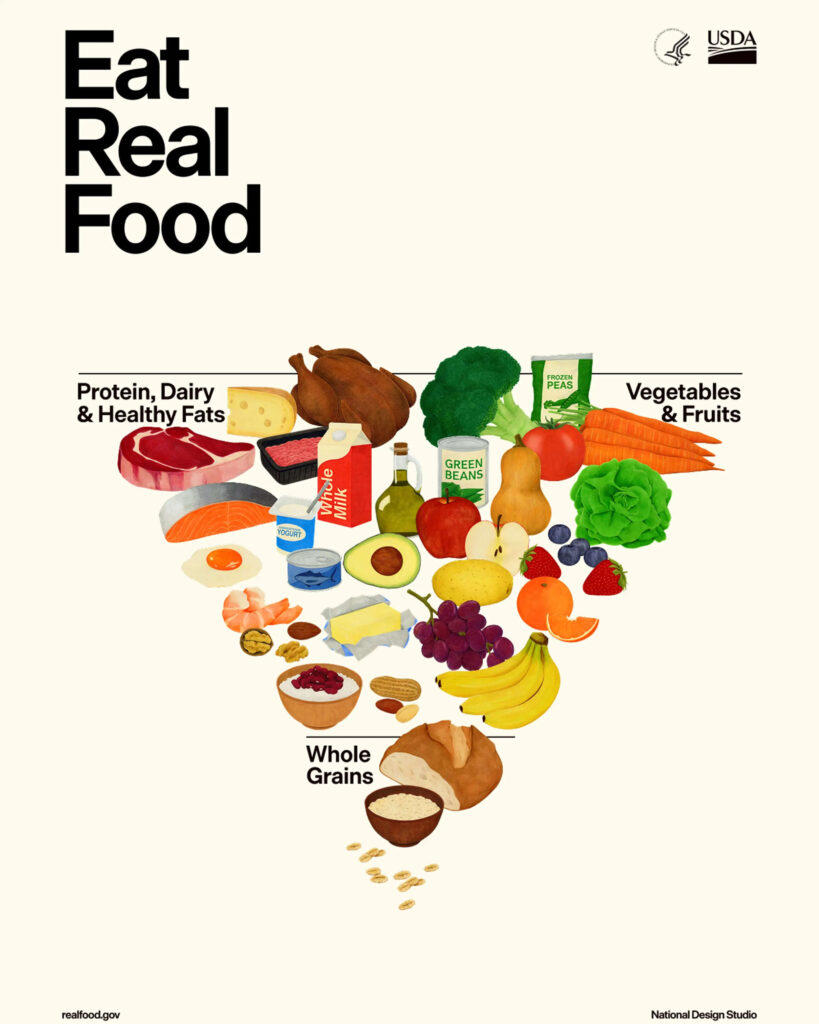
So, what do the new recommendations actually say?
Let’s break down what the flipped pyramid looks like, along with my two cents of commentary:
Eat the Right Amount for You
Although “calories” is referenced (which I am not big on), the recommendation that we all need different amounts of food is essential because we all have unique needs. I’d add that we all need different foods as well, as some of us don’t tolerate foods that others can, and vice versa. Also included here is “hydration is a key factor in overall health” with an emphasis on drinking water and unsweetened beverages. I’d include that we should drink the best quality water possible with a water filter if it’s in the budget.
Prioritize Protein Foods at Every Meal
One of the biggest changes to the dietary recommendations includes prioritizing a variety of nutrient-dense proteins from animals (including eggs, poultry, seafood, and red meat) and plants (including beans, peas, lentils, legumes, nuts, seeds, and soy). This is awesome because protein is vital for metabolic function as well as maintaining muscle & bone, producing enzymes, boosting metabolism, promoting balanced blood sugar levels, and overall vitality. I’d add that it’s beneficial for sources to be pasture-raised, grass-fed, and organic whenever possible to get the most nutrients while also avoiding GMOs and chemicals.
Consume Dairy
I like that the recommendation is to consume full fat dairy with no added sugars, but conventional dairy can be pretty inflammatory and mucus-forming in general (it can also lead to skin issues). The right sources are extremely important with this recommendation. Grass-fed, organic, and A2 dairy products are good options, but organic raw dairy is even better because it’s more nutrient dense (and unfortunately harder to find, especially in MD). We do eat dairy in our house, but it’s not tolerated well by all people.
Eat Veggies & Fruit during the day
Eating colorful, nutrient-dense vegetables and fruits is an obvious win and carries over from the previous recommendations. I like that the emphasis is on foods in their original form with frozen, dried, or canned being good options. I personally love frozen fruits and veggies because they are often frozen right after being picked so they retain more of their nutrients. In fact, I freeze a lot of our fresh-picked garden harvests! The suggestion includes limiting fruit & veggie juices, with a general daily goal of 3 servings of veggies and 2 servings of fruit.
Add Healthy Fats
The emphasis on traditional fats from whole foods like meats, poultry, eggs, omega-3 rich seafood, nuts, seeds, full fat dairy, olives, and avocados is great. I also like that it includes butter and beef tallow but I would consider inclusion of cod liver oil and coconut oil in the list. I am not sold on a cap of saturated fats (“10% of total daily calories”), but I appreciate that the encouragement to limit highly processed foods (which will by default limit highly inflammatory seed oils) is included here.
Focus on Whole Grains
I really like that grains are no longer recommended as the foundation of the diet, but information is lacking about what “whole grains” are. It suggests focusing on fiber-rich whole grains while “significantly reducing the consumption of highly processed, refined carbohydrates,” but without examples. Whole grains are “whole,” meaning they haven’t been stripped of the bran, germ, and endosperm, and are therefore higher in fiber, nutrient, and antioxidant content. Options I would consider are brown rice, wild rice, quinoa (technically a seed, but often considered a grain), whole oats, and whole ancient grains like einkorn (my personal fav), emmer, spelt, millet, kamut, etc.
Limit Processed Foods & Sugars
The recommendation suggests completely avoiding processed/packaged foods and sugar-sweetened beverages, and limiting artificial flavors, petroleum-based dyes, artificial preservatives, and non-nutritive sweeteners. Replacing these products with nutrient-dense home-prepared meals in encouraged. Avoiding (or at least limiting) non-food foods, much of which was intentionally lab-created by the tobacco companies to be as addictive as possible, is such a win! There is so much potential for better health outcomes if this recommendation is taken seriously!
Limit Alcoholic Beverages
There’s not much to add here. Thankfully limiting alcohol intake has well known and accepted positive health outcomes, including lower cancer rates. It also improves sleep quality, which helps our bodies clear out toxins and heal. Good all around!
Gut Health
There is a small addition in the recommendations about the importance of maintaining gut health, with which I completely agree. Especially because most of our immune system and seratonin production originate in the gut, it’s great that prioritizing it is being acknowledged! The recommendation shares that processed foods can disrupt the gut microbiome while whole foods, fermented foods, and fiber can support it.
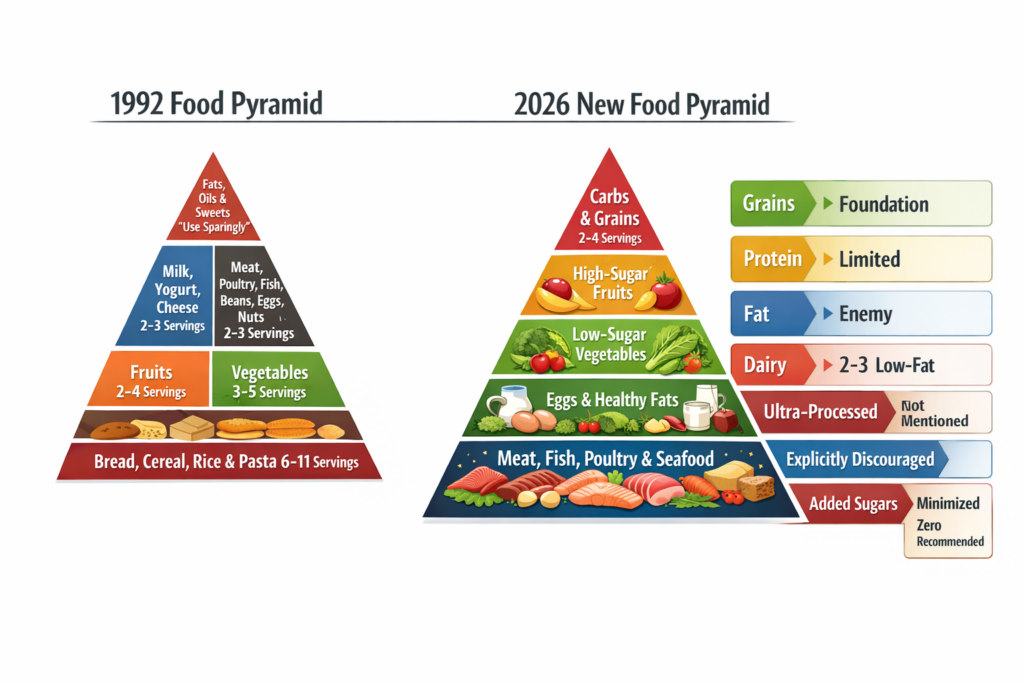
Key takeaways
- I am encouraged by the overall direction of the new food guidelines, especially removing carbohydrates as a staple and ditching low-fat foods, but I do think organic and local sourcing should be considered. My younger son actually asked me if the new pyramid meant that organic food would get cheaper (so sensible!) but I told him likely no. There isn’t really an easy fix for that, given the majority of U.S. soil is destroyed thanks to chemical spraying. It would unfortunately require an impractical overhaul of our current farming practices, as well as very strict importing standards, to make organic options accessible to everyone. Thankfully there are still local regenerative farms in many areas, as well as lots of great online grocery options.
- Avoiding ultra-processed foods and chemical additives is music to my ears! I do imagine that the processed food companies will not go down without a fight, but I assume they will work at reformulating to maintain their audiences and keep sales up. I bet we’ll be seeing lots of “high protein” processed and packaged foods in the future – it’ll be interesting to watch how that unfolds.
- The war on cholesterol seems to have (mostly) ended! Low fat is out and full fat is in. I think there is still room for improvement given the cap on saturated fats, but this is super positive overall. Awareness of the actual cause of bad cholesterol numbers being inflammation that is mostly due to high sugar consumption is gaining traction. It would be great to see more attention given to the inflammatory effects of seed oils, but I’ll take the emphasis on healthy fats as a win.
- One very positive impact of the new guidelines is that school lunches and military-issued meals will be required to follow them. Given the sad excuse for food that is served in the schools especially, this is a major victory for U.S. citizens. It will obviously require more money, but the government can either pay now with healthier food or pay later with citizens who suffer from chronic lifestyle diseases.
- Eating well requires time and money, and that’s going to be a roadblock for some families. The ease and cost-effectiveness of ultra-processed foods has made it somewhat impractical to be an “ingredient household,” as my older son likes to put it. We’ll need fresh mindsets about the time and expense required for food preparation at home, and that may include some drastic and potentially unrealistic lifestyle changes. It would be amazing to see scratch home cooking become the norm though!
Final Thoughts
The Real Food government website shares some pretty daunting statistics along with the new pyramid reveal:
- 50 % of Americans are plagued with Diabetes or Pre-Diabetes;
- 75% of American adults are suffering from a chronic health condition; and
- 90% of U.S. healthcare is being spent on managing chronic health conditions that are mostly lifestyle-based.
I think we can all agree that these statistics are truly abysmal and some very serious changes are needed. Th2 2026 pyramid is a tremendous step and I am glad to see that food is being recognized as a major factor of wellness. I suspect it will take years (decades?) for any obvious statistical improvements to be seen nationally, but this is a very promising change.