Glorious Goldenrod
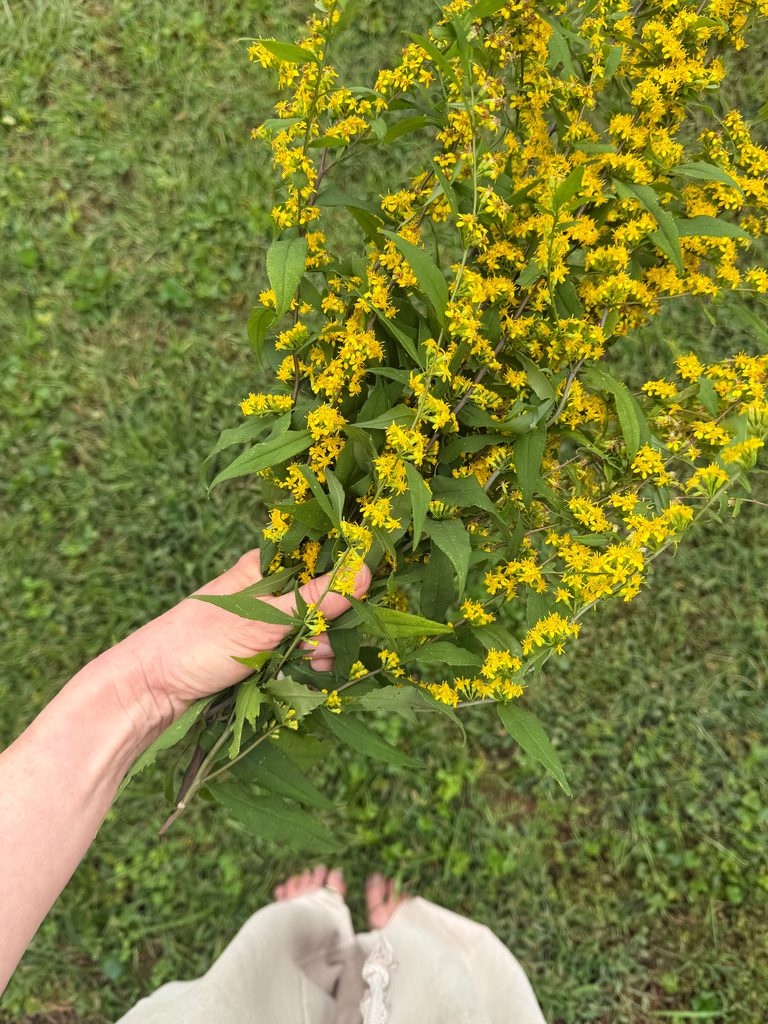
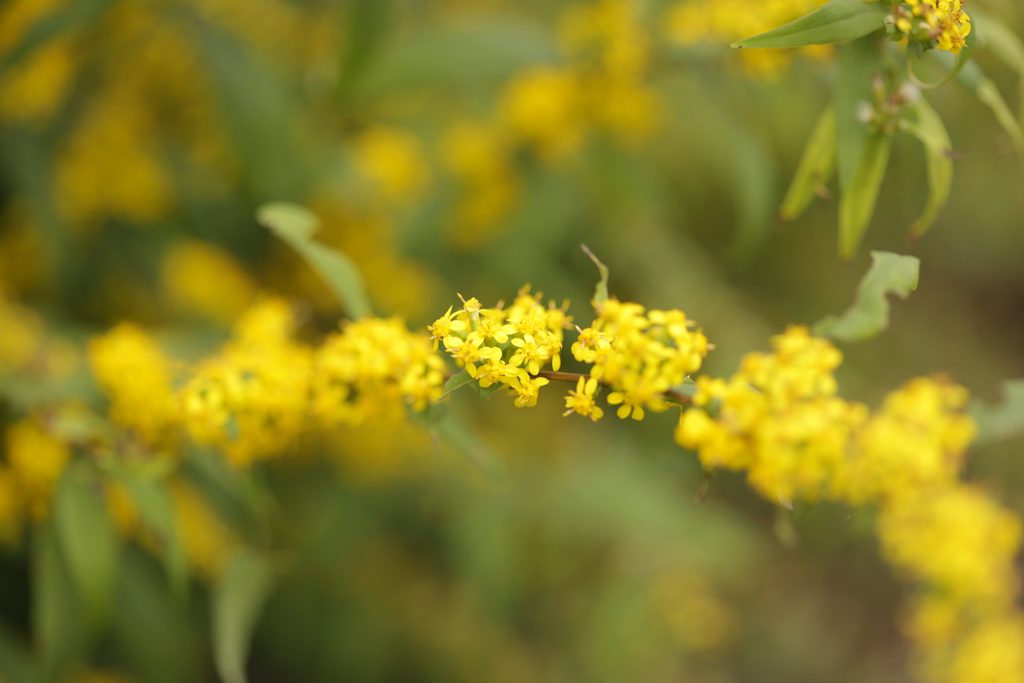
It is officially fall in Maryland, which means the colors are beginning to change and it’s time to harvest Goldenrod! Truly glorious! It’s easy to spot the luscious clusters of pretty yellow flowers on tall stalks lining country roads – they are everywhere. Their little flowers remind me of a million mini daffodils all lined up. Solidago spp. (S. canadensis, S. odora, S. virgaurea, S. gigantea, S. caesia, and others) includes over 100 different species, with S. canadensis (Canadian Goldenrod) being one of the most widespread in America. It’s the S. canadensis that you’re mostly likely to see growing wild. I believe most (or all?) Goldenrod species are medicinal and can be used interchangeably. It’s a great herb to have on hand because it has so many uses. Although all of the aerial parts are useable, I typically harvest just the leaves and flowers, right as the flowers are coming into bloom. It’s ideal to use the plant fresh, but drying for tea also works.
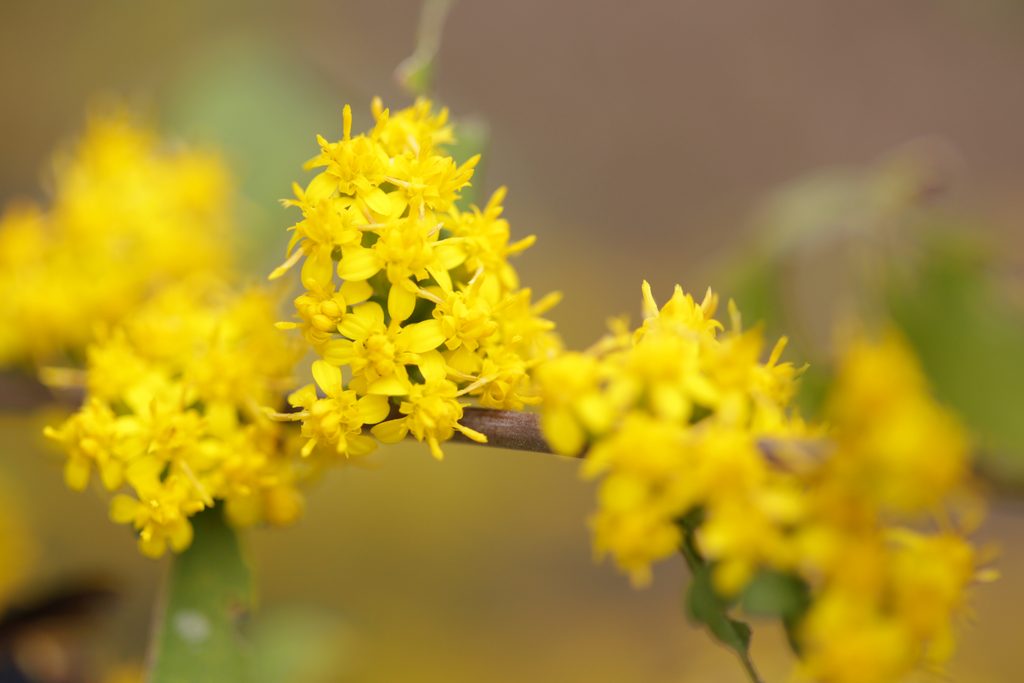
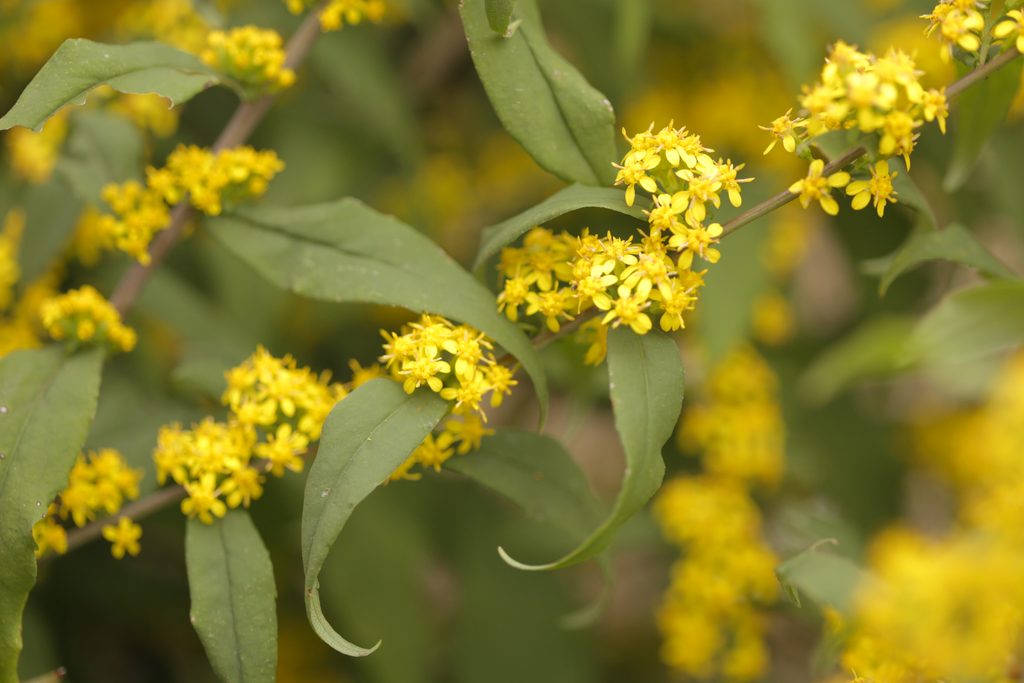
It grows wild for foraging but it is also super easy to cultivate in the garden. I am growing S. caesia, which is native to the U.S. east coast. It looks a bit different than S. canadensis because the flowers grow all along the top half of the stalk, compared to just at the top. It will grow abundantly in part-shade to part-sun areas and adds a pretty splash of color right when everything else is turning brown. Rich in antioxidants, Goldenrod is a powerful herb to fight free radical damage. It is especially supportive of the cardiovascular system and has so many uses! Mostly known for relief of seasonal allergies and urinary concerns, Goldenrod offers a multitude of other benefits.
Herbal qualities: anti-fungal, antimicrobial, anti-inflammatory, antiseptic, antispasmodic, astringent, carminative, cholagogue, diaphoretic, diuretic, expectorant, styptic
Energetics: cooling or warming (depending on species), toning, drying
Relieves seasonal allergies: Although sometimes confused with ragweed (often the culprit behind hay fever), Goldenrod is actually supportive of allergic rhinitis symptoms. It is especially indicated for red/watery eyes, itchy/runny nose, and excessive sneezing. It’s helpful for seasonal and cat allergies. It can be taken as an infusion, tincture, or oxymel.
Supports urinary tract + elimination: Given the toning, antimicrobial, anti-inflammatory, astringent, and diuretic qualities of Goldenrod, it is a wonderful ally for the urinary tract and kidneys. It can be supportive for painful urination, UTI, kidney stones, and kidney inflammation. It can also be helpful to flush the urinary system and clear edema.
Supports cold + flu symptoms: Goldenrod’s antimicrobial and astringent qualities, along with its drying and toning energetics, are supportive for the upper respiratory system. It also relieves sinus congestion, soothes sore throats as an infusion or herbal honey, and can act as a mild fever reducer thanks to its diaphoretic quality. As an expectorant, it also helps break up excess mucus in the lungs so it can be coughed out.
Soothes digestive complaints: Goldenrod offers digestive support for nausea and intestinal complaints (leaves), colic in infants (leaves + flowering tops), gas, stomach cramps, and vomiting in children and adults.
Soothes skin irritations: Used as a poultice for wounds, burns, boils, or insect stings, Goldenrod is an excellent vulnerary herb that promotes the body’s natural healing process. It would also make a great burn salve. As a styptic, it has an affinity for constricting blood vessels to stop bleeding wounds.
Relieves muscle pain + arthritis symptoms. Used as an infused oil or poultice, Goldenrod’s anti-inflammatory quality makes it a worthwhile herb to relieve pain. It can also be helpful for swollen areas.
Anti-fungal. Goldenrod is particularly helpful against Candida, which makes it great for vaginal yeast and oral thrush infections. It can be used as a mouthwash (made from an infusion) or as a sitz bath, and it pairs especially well with Bee Balm, which is a strong antimicrobial herb.
Preparations: Infusion, tincture, oxymel, salve, herbal honey, poultice, infused oil
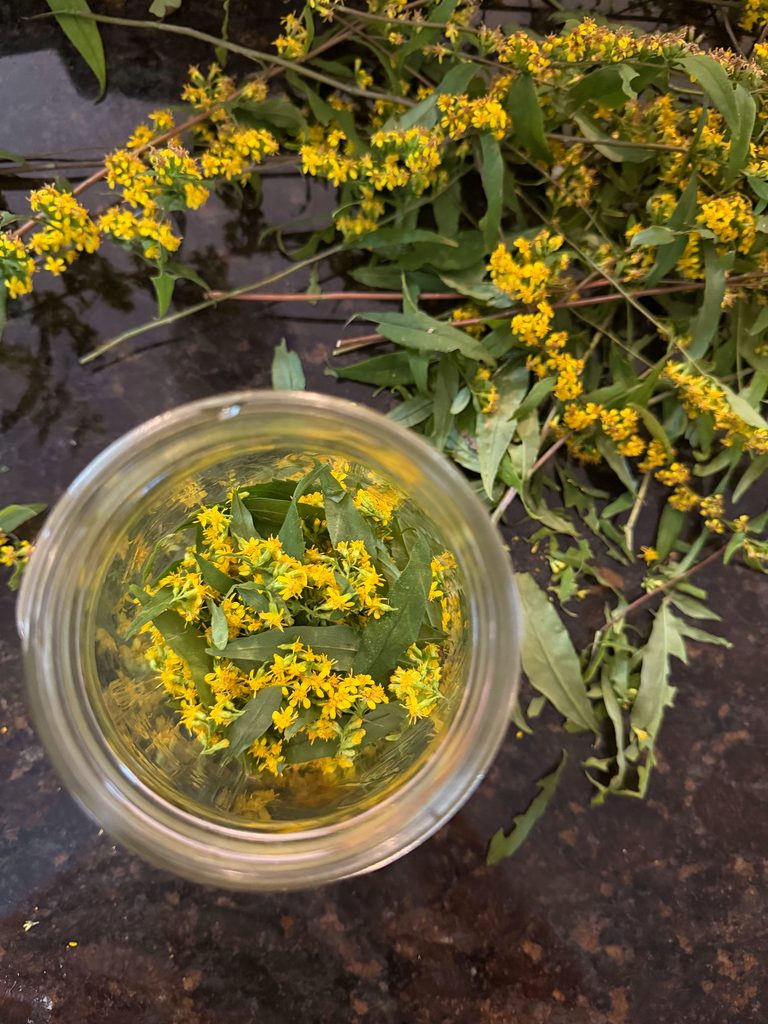
I really like to harvest fresh Goldenrod to make an oxymel in preparation for the winter months. Although it can certainly be dried for an infusion, preparing it fresh in an oxymel guarantees it’s ready to go in the refrigerator. Given its affinity for upper respiratory conditions, it’s a great preparation to have in the winter wellness arsenal! Click below for directions to make it using the folk method:
Cautions + considerations: Goldenrod is traditionally considered well tolerated by infants, children, and the elderly but care should be taken for allergies to the Asteraceae family. Given the diuretic effect, it is probably better to avoid Goldenrod right before bedtime. Care should be taken if also using pharmaceutical diuretics or blood thinners, or if being treated for kidney disease/failure. Likewise, it should not be used for edema as a result of kidney failure. Caution is indicated for pregnant and nursing mothers.
References
de la Forêt, R. (2026). Goldenrod Uses and Plant Profile. Learningherbs.Com. https://www.learningherbs.com/blog/goldenrod-uses
Easley, T. (2016). The modern herbal dispensatory: A medicine-making guide. North Atlantic Books.
Groves, M. N. (2016). Body into balance: An herbal guide to holistic self-care. Storey Publishing.
Onacki, D. (2014, September 3). Health benefits of goldenrod (+ tea recipe). Herbal Academy. https://theherbalacademy.com/blog/health-benefits-of-goldenrod/