Calming Chamomile
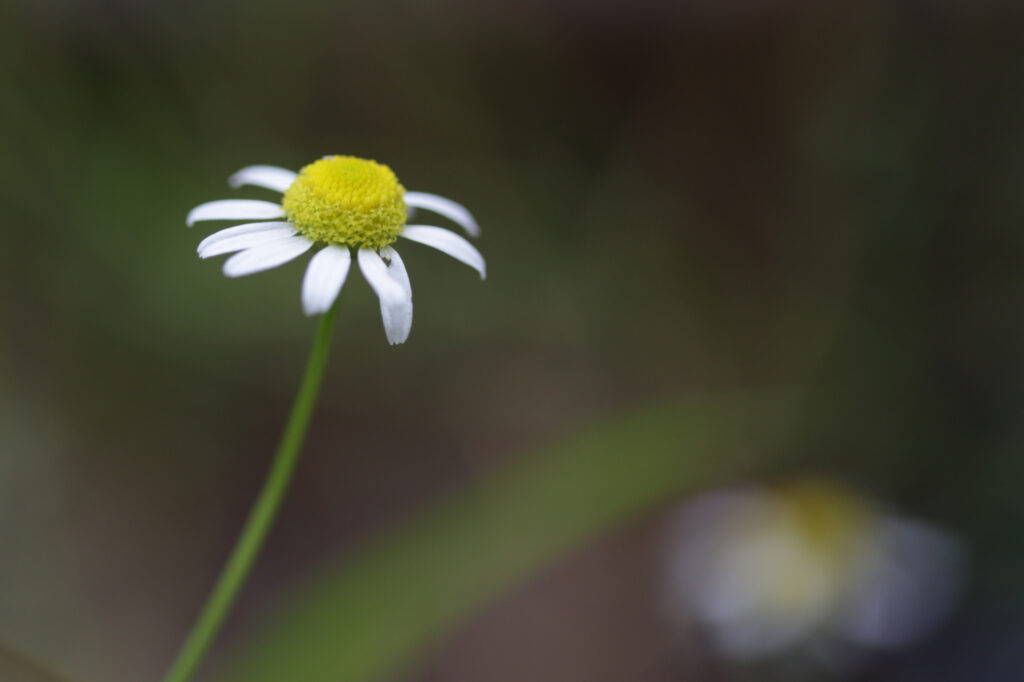
German Chamomile (matricaria chamomilla) is one of my absolute favorite herbs to harvest at home! It grows prolifically and actually self seeds! I toss the dead flowers into the soil where it grows and it comes back year after year. I am in the thick of my harvesting season, so I’m trying to pluck as many flowers as I can to dry. It is one of the best herbs to keep on hand because it is just so, so versatile. It also smells lovely and makes a delicious tea!
It’s more of a “planted” herb but it can definitely be found while foraging. Although it’s less likely to be mis-identified because it’s planted in the garden, It can easily be mistaken for other flowers like daisy or feverfew, so it’s important to properly identify before foraging.
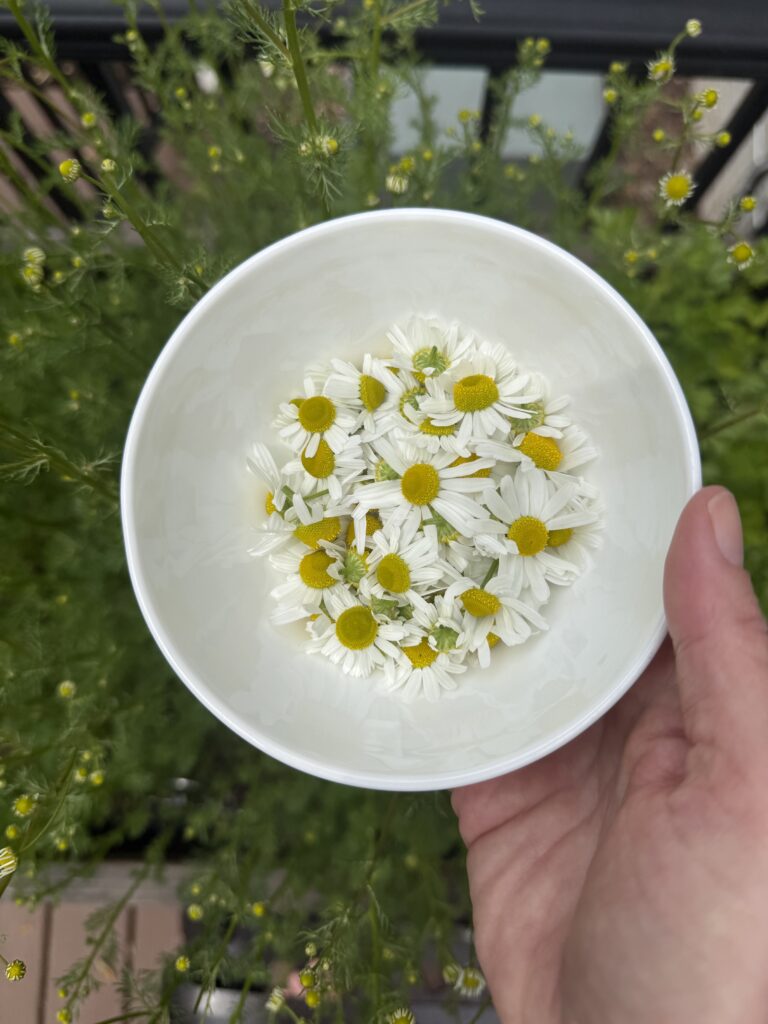
The flowering tops are what is used from this plant – the more you pick, the more flowers will sprout. Picking heavily when the plants first start to bloom ensures you’ll have a good harvest! You’ll be amazed at how many flowers grow!
Chamomile is considered a cure-all by most herbalists because it has so many uses! Most people think of it as just a good bedtime tea because it supports sleep, but it has many other qualities. It’s a wonderful herb for kids too, being safe even for babies. It can support teething, fussiness, fever, irritability, and hyperactivity in kids when given as a tea.
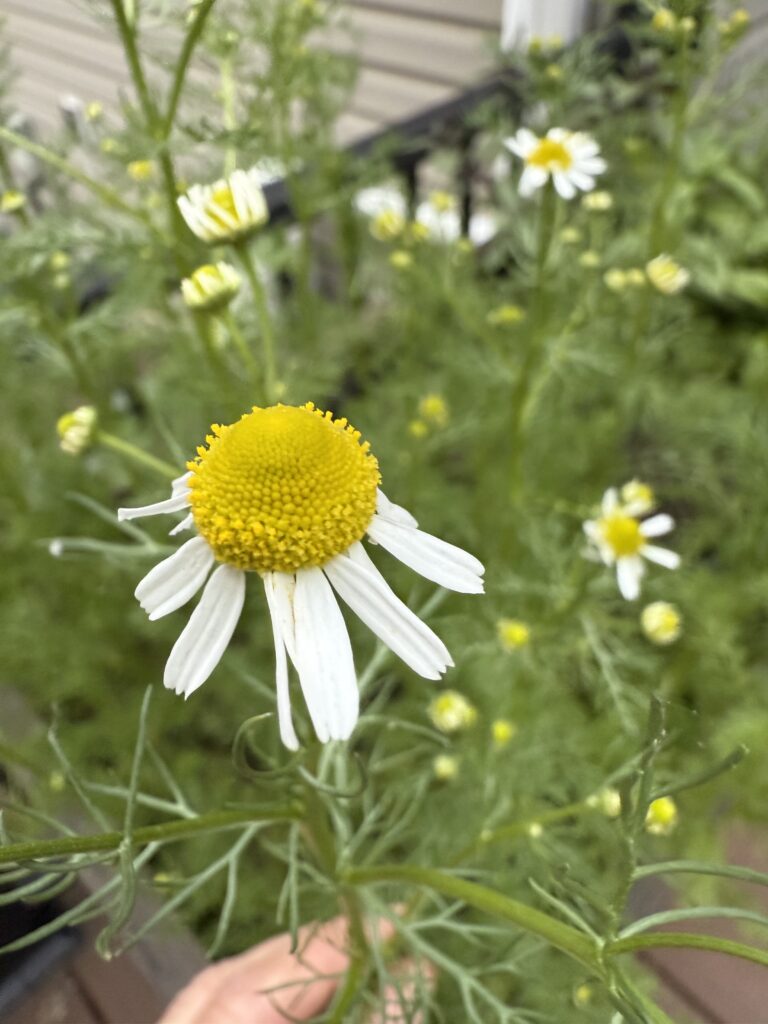

Herbal qualities: anti-inflammatory, antimicrobial, antispasmodic, anxiolytic, bitter, carminative, nervine, sedative, vulnerary
Energetics: cooling, drying
GI support: Chamomile shines for support with bloating, gas, constipation, diarrhea, and can even calm colic for babies when given as a tea. Taken as a tea, it’s also a fantastic support for gut health!
Anxiety + sleep support: Known to promote restful sleep and often seen an ingredient in bedtime teas, chamomile can also support symptoms of stress, nervousness, anxiety, and depression. And as stated above, it can also be support of hyperactivity, making it helpful for kids who have ADHD and need some support to calm their bodies.
Skin soothing: Chamomile’s anti-inflammatory and vulnerary qualities make it a nice herb to add to poultices, salves, or washes for skin irritations like sunburns and superficial wounds.
Mouth irritations: Chamomile can be used as a mouthwash to support minor ulcers or mouth + throat irritations. It’s great to consider for cold + flu support for this reason as well!
Joint pain relief: Used topically as a poultice, chamomile can help to ease joint pain, symptoms of arthritis, and inflammation.
Eye soothing: Belief it or not, chamomile makes a soothing eye wash or compress for irritations (like getting something stuck in your eye) and can even support pink eye thanks to its antimicrobial quality.
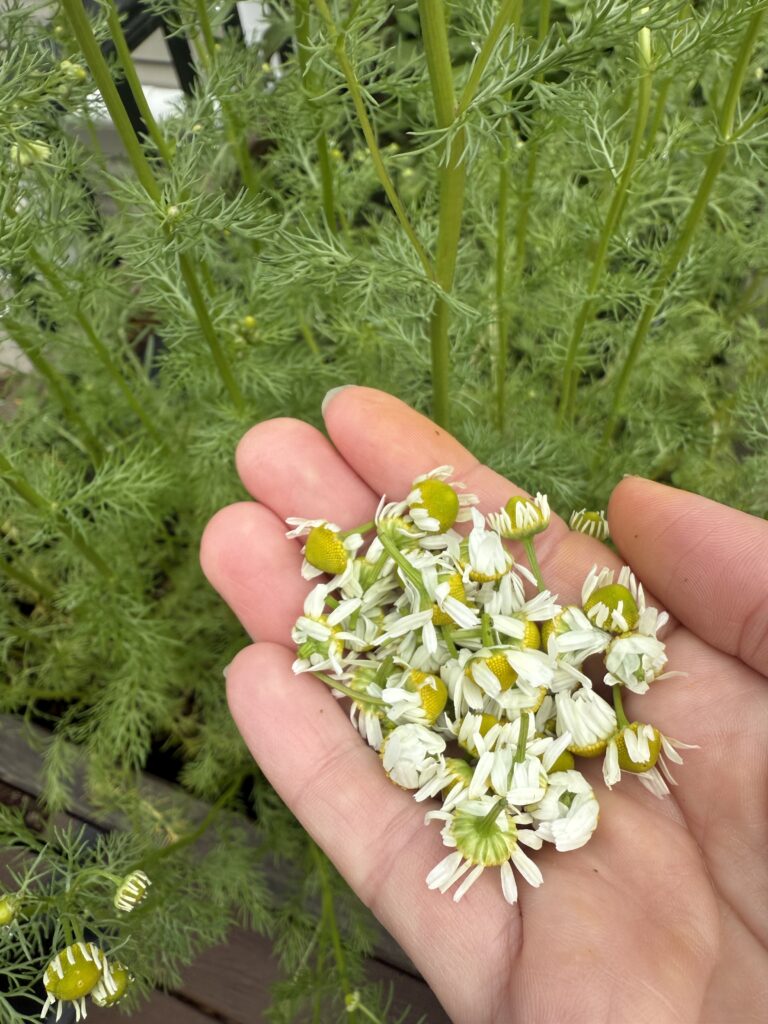
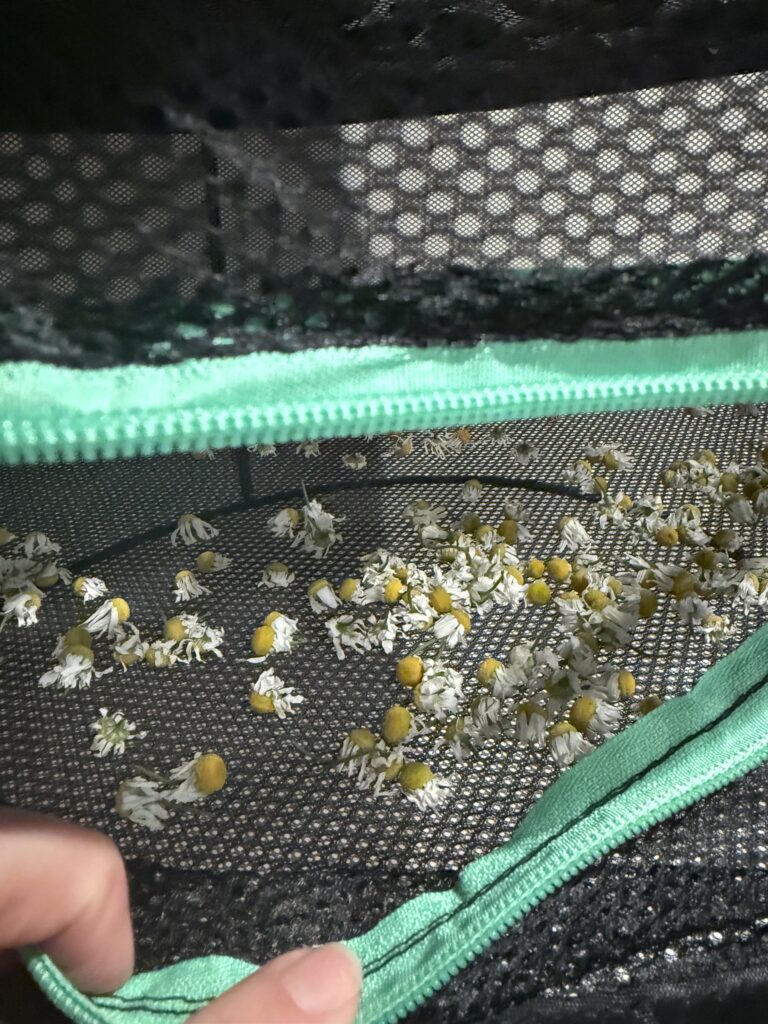
Preparations: infusion, tincture, wash, compress, poultice, mouthwash, bath, infused herbal oil
Cautions + considerations: Chamomile is generally considered safe when taken within suggested doses and is safe for children, pregnancy, and lactation. It should not be used in conjunction with medication or iron supplementation, and should not be used before surgery. Avoid bathes for large skin injuries.
References
Easley, T. (2016). The modern herbal dispensatory: A medicine-making guide. North Atlantic Books.
Forêt, R. de la. (2017). Alchemy of herbs. Hay House, Inc.
Gladstar, R. (2012). Medicinal herbs: A beginner’s guide. Storey Publishing, LLC.